
Food and Beverage Label Printing: What Brands Get Wrong
Key Takeaways
– The FDA’s nutrition labeling rules under 21 CFR Part 101 set mandatory type sizes, placement, and content requirements that vary by package size and product category.
– Alcohol brands must clear a separate federal layer: TTB label approval before a single bottle can ship to retail.
– Digital roll presses eliminate films, plates, and dies, making short print runs economically viable for the first time.
– Substrate choice – paper vs. film vs. foil – directly affects whether a label survives refrigeration, humidity, and condensation.
– No-minimum ordering lets small brands test SKUs without committing to pallet quantities.
A product’s first sale is made on the shelf, before anyone reads the ingredient list. The label is doing that work. It takes about seven seconds for a shopper to decide whether to pick up a package (Food Marketing Institute, 2023), and most of that decision is visual. Yet every week, brands arrive at print shops with labels that have the wrong substrate for a refrigerator environment, compliance text that’s four points too small, or a design that reads beautifully on screen and falls apart under fluorescent grocery lighting. The gap between a great design file and a label that performs on shelf is where most food and beverage brands lose.
This post covers the five questions TLF Graphics hears most often from food and beverage clients, and the answers that keep products off the “reprint” list.
What Makes Food and Beverage Labels Different from Other Label Categories?
Food and beverage label printing sits inside a more demanding environment than almost any other product category. The FDA reports that there are over 850 individual requirements that may apply to a food product label under 21 CFR Part 101, depending on product type, serving claims, and package size (FDA, 2024). That regulatory layer has no equivalent in industrial or promotional labeling.
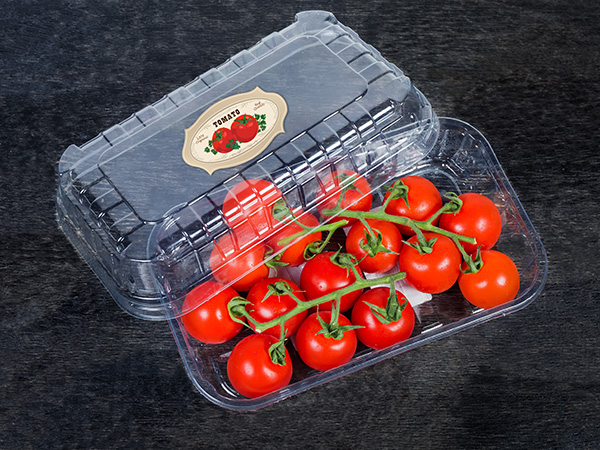
The physical demands are just as unforgiving. A label printed for a glass hot sauce bottle must survive pasteurization temperatures and moisture. A craft beer label must hold onto a cold, condensation-covered bottle through a bar refrigerator, a cooler, and a customer’s hand. A clamshell produce label gets applied at cold temperatures and has to stay legible through shipping and retail display.
Design, compliance, substrate, and adhesive all have to solve the same problem at the same time. That’s what makes this category hard.
In our experience working with food and grocery clients across dozens of SKUs, substrate failure and compliance errors are the two most common reasons a label reprint is ordered before a product launch. Design revisions are a distant third.
What Substrate Should You Use for Food Labels?
Substrate selection is the single most consequential technical decision in food and grocery label printing. The wrong material doesn’t just look bad. It fails: adhesive releases, ink smears, or the surface clouds over in a reach-in cooler. According to TLMI (The Label and Narrow Web Industry Association), moisture and temperature-related label failures account for a significant share of consumer complaints tied to packaging (TLMI, 2022).
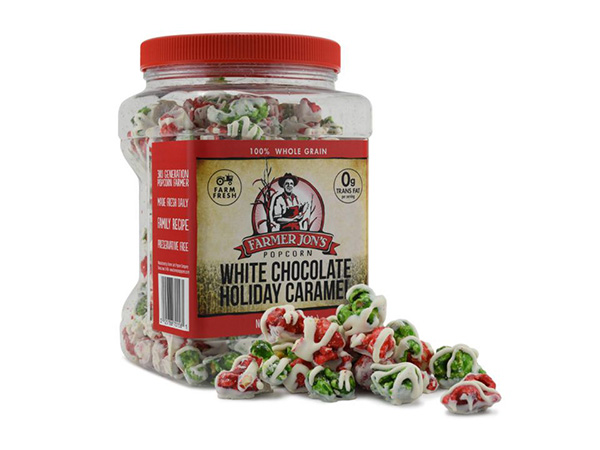
Paper labels work well for ambient shelf products and dry goods. They print beautifully, take embellishments like foil stamping and varnish well, and cost less than film alternatives. Farmer Johns Popcorn uses paper-based labels precisely because the product is shelf-stable and the label can carry rich color and texture.
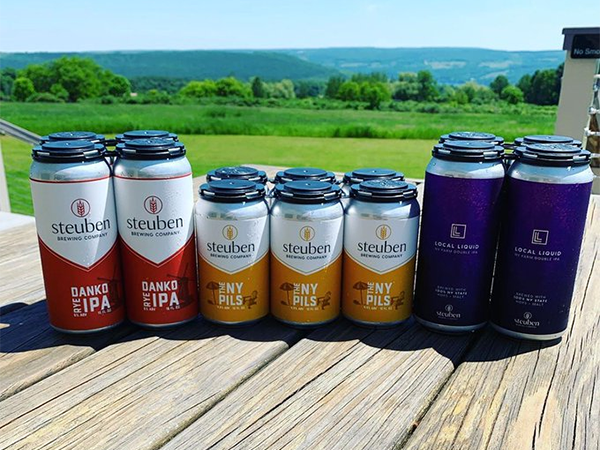
Film and polypropylene labels are the standard for wet, refrigerated, and frozen environments. They resist moisture and don’t soften or wrinkle when a bottle sweats. Craft beverage clients like Steuben Brewing choose film substrates because their bottles spend hours in cold storage and ice.
Foil and specialty substrates communicate premium positioning. Hot foil stamping and embossing catch light in a way that paper and film don’t. Iron Smoke Distillery’s labels use exactly this approach to stand apart on a crowded spirits shelf.
Adhesive Matters As Much As the Facestock
The substrate you see is only half the equation. The adhesive underneath determines whether that substrate stays on the package. Cold-temperature adhesives behave differently than room-temperature ones. Freezer-grade adhesives are formulated differently still. An ambient-rated adhesive on a frozen product is a label that peels at retail. Always specify the end-use environment when ordering. See TLF Graphics’ full print technologies overview for substrate and adhesive options by application.
How Do On-Demand Labels Work for Short Shelf-Life Products?
On-demand food label printing solves a problem that traditional print runs can’t: a product whose specifications change faster than its label inventory turns over. A commercial kitchen preparing fresh grab-and-go meals may change protein sources weekly. A prepared food retailer might run 40 SKUs simultaneously, each with a different “use by” date applied at pack time. The FDA requires accurate, current information on every label – a static print run can’t guarantee that (FDA 21 CFR Part 101, 2024).
Digital roll presses change the economics entirely. There are no films, no plates, and no dies to set up. A run of 500 labels costs nearly the same per-unit as a run of 5,000. For fresh and prepared food clients, that means labels can be ordered in smaller quantities tied to actual production cycles, not forecasted volumes that may never materialize.
Variable data capability takes it further. Each label in a run can carry a unique date, batch number, or nutritional panel without stopping the press. Lean Nation, a nutrition and meal replacement brand, uses this approach to manage multiple product variants without carrying excess label inventory.
On-demand printing also reduces regulatory risk. When an ingredient changes or an allergen statement needs updating, a brand running digital short-run labels can switch to a corrected version in days. A brand sitting on 50,000 pre-printed labels has a much harder decision.
What Are the Compliance Requirements for Food and Beverage Labels?
Compliance requirements split into two tracks depending on whether you’re printing food labels or beverage label printing for alcohol. Both tracks have federal requirements. Alcohol adds state-level requirements on top.
For food products, the governing rule is FDA 21 CFR Part 101. It specifies what must appear on a label (nutrition facts, ingredient list, allergen declaration, net quantity, name and address of manufacturer), the minimum type sizes for each element, and where those elements must be placed on the package. The requirements scale with package size. A 1-oz snack pouch has different obligations than a 32-oz family-size container (FDA, 2024).
For alcohol, the Alcohol and Tobacco Tax and Trade Bureau (TTB) requires label approval before a product can be sold across state lines. The application covers mandatory information including brand name, class and type designation, net contents, alcohol content, and health warning statements. Beer labels follow the TTB’s specific beer labeling requirements at ttb.gov/beer/labeling. Wine and spirits labels each have their own parallel approval paths.
What About Allergen Declarations?
The Food Allergy Safety, Treatment, Education, and Research (FASTER) Act of 2021 added sesame as the ninth major food allergen under U.S. law, effective January 1, 2023 (FDA FASTER Act, 2023). Any brand that had labels printed before that date and still holds inventory needs to confirm compliance. This is another situation where digital, short-run label ordering provides a compliance safety net. Contact TLF Graphics for a compliance label review.
How to Choose a Food and Beverage Label Manufacturer
The right food label manufacturer for your brand depends on four factors: print capability, compliance knowledge, turnaround speed, and minimum order flexibility. A printer that excels at high-volume flexo runs may not be the right fit for a startup that needs 500 labels to test a new SKU.
Print capability covers both technology and finishing. Digital presses handle short runs and variable data. Flexo handles high volumes with consistency. Embellishment options – foil stamping, embossing, spot varnish, thermochromic inks – determine whether a label can achieve the premium look a spirits or wine brand needs. TLF Graphics operates over 75 printing and finishing devices, covering digital, flexo, and specialty embellishment in a single facility.
Compliance knowledge isn’t standard. A printer that works exclusively in the food and beverage space understands TTB approval timelines, FDA type-size requirements, and the substrate choices that hold up under FDA Good Manufacturing Practice environments. Ask prospective suppliers directly: have they printed for TTB-regulated alcohol clients? Can they document their ISO 9001:2015 quality management process?
Turnaround speed matters most in two situations: product launches with hard retail deadlines, and the kind of fast-pivot scenario where a label needs to change quickly. How Karma Sauce won Label of the Year during a viral Hot Ones moment is a good illustration of what happens when a brand’s label printer can move fast.
No-minimum ordering is non-negotiable for emerging brands testing multiple SKUs. A printer that requires 5,000-unit minimums is the wrong partner for a craft producer running seasonal varieties. Review TLF Graphics’ full product decoration capabilities for finishing options across all label categories.
Frequently Asked Questions
What is the minimum order quantity for food and beverage labels?
TLF Graphics has no minimum order quantity for digital label runs. Digital roll presses eliminate the plate and die costs that make small runs expensive on traditional flexo equipment. A brand can order 250 labels for a market test as easily as ordering 25,000 for a full retail rollout.
How long does a food label reorder typically take?
Turnaround depends on complexity. A straight reorder of a previously printed label – same substrate, same file – can turn around in days on digital equipment. New labels requiring new art approval, specialty substrates, or embellishment finishing take longer. Discuss lead times before you set a retail launch date.
Can my label print be used on both bottles and cans?
Labels for cans and bottles use different application methods and sometimes different adhesives. Can labels may require pressure-sensitive application in high-speed environments. Shrink sleeves are a third option that wraps the entire container. The right format depends on your packaging line, not just your design preference. Beverage label printing options including shrink sleeves are available for both formats.
What file format should I submit for food label printing?
Most label printers prefer print-ready PDF files with embedded fonts, CMYK color mode, and a minimum 300 DPI for raster elements. Confirm bleed requirements with your printer before finalizing files – bleed specs vary by label size and substrate. TLF Graphics provides art resources and guidelines through its customer resource center.
Do I need separate labels for different product flavors or variants?
Each variant with a different name, flavor, ingredient list, or nutritional profile needs its own label. Variable data printing makes this practical for short runs. You can print multiple variants in a single press run with unique information on each label, rather than ordering separate jobs for each SKU.
What embellishments are available for premium food and beverage labels?
TLF Graphics offers digital foiling, embossing, spot varnishing, digital holograms, and thermochromic inks through its JetFX embellishment system. Hot foil stamping is available for traditional embellishment. These finishes are common in spirits and wine categories where shelf differentiation justifies the added cost. See the full range of print technologies for specifics.
Work with a Food and Beverage Label Manufacturer That Knows the Category
Food and beverage label printing is a specialty. The margin for error is thin, the regulatory requirements are specific, and the environments labels must survive are genuinely harsh. Getting the substrate wrong, the compliance text wrong, or the turnaround wrong doesn’t just cost money on a reprint. It can cost a product launch.
TLF Graphics has worked with food and beverage brands for over 45 years. The team is an Allied Member of the NYS Brewers Association and the NY Wine & Grape Foundation. It holds ISO 9001:2015 certification and has been named a Rochester Top 100 Company eleven times. From fresh produce clamshells to TTB-approved spirits labels, the production floor covers it. Contact TLF Graphics to start a label project.
TLF Graphics Inc.
235 Metro Park, Rochester, NY 14623
Phone: (800) 356-2701 | (585) 272-5500
Email: sales@tlfgraphics.com
Web: www.tlfgraphicsusa.com
Sources
- U.S. Food and Drug Administration. Food Labeling & Nutrition: 21 CFR Part 101. FDA.gov. https://www.fda.gov/food/food-labeling-nutrition (accessed June 2026).
- U.S. Food and Drug Administration. FASTER Act of 2021 – Sesame as a Major Food Allergen. FDA.gov. https://www.fda.gov/food/food-allergensgluten-free-guidance-documents-regulatory-information/food-allergen-labeling-and-consumer-protection-act-2004-falcpa (accessed June 2026).
- Alcohol and Tobacco Tax and Trade Bureau. Beer Labeling. TTB.gov. https://www.ttb.gov/beer/labeling.shtml (accessed June 2026).
- Food Marketing Institute. Power of Impulse: Shopper Behavior at Retail. FMI.org, 2023. https://www.fmi.org
- TLMI (The Label and Narrow Web Industry Association). Label Performance and Substrate Failure Report. TLMI.com, 2022. https://www.tlmi.com
- TLF Graphics. Food & Grocery Label Printing. tlfgraphicsusa.com. https://www.tlfgraphicsusa.com/food-grocery/
- TLF Graphics. Beverage Label Printing. tlfgraphicsusa.com. https://www.tlfgraphicsusa.com/beverage/
- TLF Graphics. Print Technologies. tlfgraphicsusa.com. https://www.tlfgraphicsusa.com/print-technologies/