
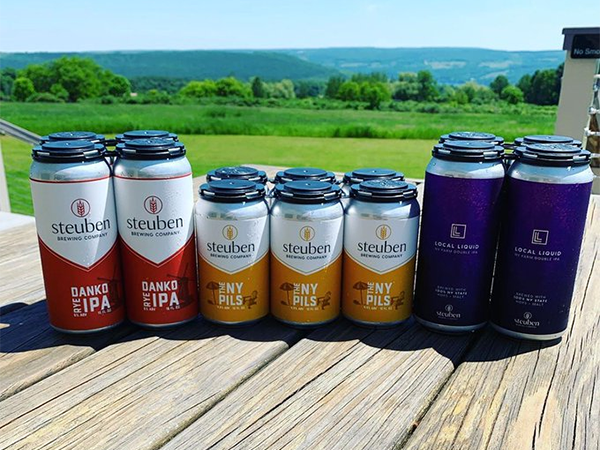
Beer Label Printing for Craft Breweries | TLF Graphics
There are over 9,700 craft breweries operating in the United States as of 2024, according to the Brewers Association. Every one of them is competing for the same three seconds of shelf attention. Your beer label is not decoration. It’s the only salesperson in the cooler.
A generic label won’t cut it. TTB compliance, substrate durability, and shelf-ready finishes are non-negotiable. But what separates a label that survives the cold chain from one that actually sells? That’s what this post is about. TLF Graphics handles beverage label printing for breweries, wineries, distilleries, and more.
Key Takeaways
– Over 9,700 U.S. craft breweries compete for shelf space, making label differentiation critical (Brewers Association, 2024)
– TTB requires six mandatory elements on every beer label: brand name, class/type, alcohol content, net contents, producer name/address, and country of origin if imported
– Wet-strength paper and BOPP film are the two most common substrates for bottle labels; each serves a different budget and finish goal
– Thermochromic inks change color when a beverage reaches serving temperature, turning a label into an interactive cue
– No minimum order quantities mean small-batch and seasonal releases are practical without large upfront commitments
What Do TTB Regulations Require on a Beer Label?
The Alcohol and Tobacco Tax and Trade Bureau mandates specific information on every beer label sold in the U.S. (TTB Beer Labeling, 2024). Non-compliance can hold up your Certificate of Label Approval (COLA) and delay your entire product launch. Getting these six elements right from the start is not optional.
The mandatory fields are: brand name, class or type designation (such as “American IPA” or “Stout”), alcohol content by volume, net contents, the name and address of the bottler or importer, and country of origin for any imported product. Each field carries specific placement and type-size rules. A label printer who understands TTB requirements can help you build compliant artwork before you submit.
Breweries that submit COLA applications with artwork already formatted to TTB specs tend to clear approval faster. Building compliance into the design phase, not the revision phase, saves weeks.
Most small breweries are surprised to learn that the COLA is required for any beer sold across state lines. Even a single out-of-state account triggers the filing. For questions directly to the bureau, TTB’s hotline is (866) 927-2533 and their full beer labeling guide lives at ttb.gov/beer/labeling. The TLF craft beverage art guidelines PDF also walks through how to set up artwork for compliant, press-ready submissions.
Citation Capsule: The TTB requires every domestically produced beer label to display the brand name, class/type, alcohol content by volume, net contents, and name and address of the producer. Imported products must also show country of origin. Breweries seeking interstate distribution need a Certificate of Label Approval before products ship. (TTB Beer Labeling Requirements, 2024)
What Substrates Work Best for Beer and Beverage Labels?
Substrate choice is where many brewery label projects go wrong. The cooler is a brutal environment. Condensation, ice water in a retail bucket, and repeated temperature cycling will destroy a label printed on the wrong stock. In our production experience, substrate failures account for the majority of label complaints from beverage clients, outpacing ink and color issues combined.
Wet-strength paper is the classic choice. It holds up in ice-water immersion tests and takes ink beautifully, especially on premium uncoated stocks that give a tactile, craft feel. It’s the substrate behind most of the heritage labels you recognize on the shelf.
BOPP film (biaxially oriented polypropylene) is the modern workhorse for wet environments. It’s waterproof by nature, tear-resistant, and accepts high-gloss or matte finishes. BOPP handles condensation without the edge-lift or face-curl problems that affect paper in extreme cold. For canned formats or heavily iced retail displays, it’s hard to beat.
Can labels are a different challenge altogether. Shrink sleeves, a non-adhesive wrap applied with heat, give 360-degree coverage across the entire can body. They allow full-bleed artwork that wraps seam-to-seam, with no label edge to peel. TLF Graphics produces both pressure-sensitive bottle labels and shrink sleeves from the same facility. See the full range of print technologies available from TLF.
Citation Capsule: Wet-strength paper and BOPP film are the two dominant substrates for craft beer labels. BOPP film’s waterproof properties make it the preferred choice for ice-water bucket environments and heavily chilled retail displays, while wet-strength paper remains popular for premium craft aesthetics that benefit from a tactile, uncoated surface.
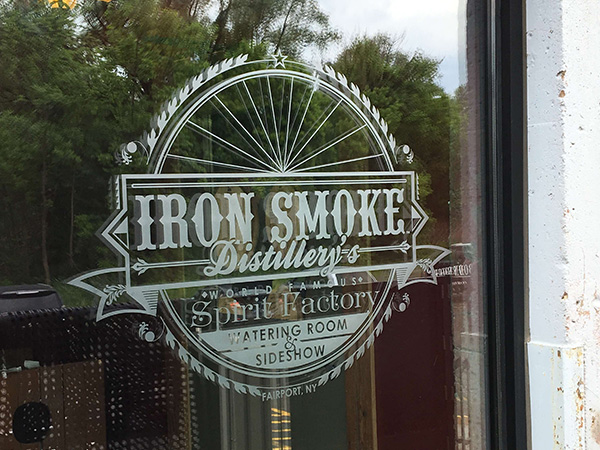
Iron Smoke Distillery spirits labels produced by TLF Graphics, Rochester NY.
What Finishing Options Differentiate Craft Beverage Labels on the Shelf?
Finishes are where a label stops blending in. According to a 2023 PMMI packaging industry study, 72% of consumers say packaging design influences their purchase decisions at the point of sale. On a crowded craft beer shelf, finish is the difference between a bottle that gets picked up and one that gets passed over.
TLF Graphics offers finishing through a JetFX digital embellishment system that runs entirely digitally, no tooling required. The capabilities include:
- Hot foil stamping – metallic foil applied with heat and pressure, giving a premium reflective surface
- Embossing – raised dimensional texture that shoppers can feel through the glass
- Spot varnish – selective matte or gloss coating that creates contrast within the label face
- Digital holograms – security and visual interest in one element
- Digital tactile screening – raised print effects without traditional embossing dies
The most underused option in craft beverage is thermochromic ink. This is a temperature-sensitive ink that changes color when the bottle or can reaches serving temperature. It’s a functional cue: the label tells the drinker when the beer is cold enough to drink. That’s not a gimmick. That’s a brand interaction that happens every time someone pulls a bottle from the fridge.
For direct-to-container applications, TLF also runs UV LED inkjet printing directly onto bottles, cans, or other containers. No label substrate at all. The print bonds directly to the surface. Explore the full range of product decoration options available from TLF.
Citation Capsule: Digital finishing technologies including hot foil stamping, embossing, spot varnish, and thermochromic inks allow craft beverage labels to deliver physical differentiation at retail. Thermochromic inks, which change color at a defined temperature, convert a passive label into an active consumer cue. These effects are now achievable via digital systems, removing the traditional tooling cost barriers.
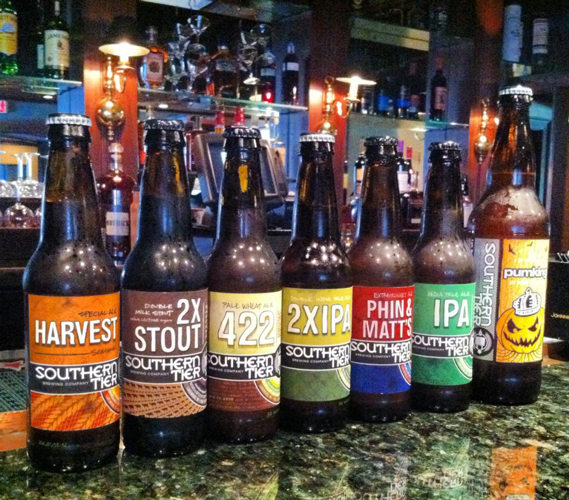
Southern Tier Beer labels produced by TLF Graphics.
How Does No-Minimum Beer Label Printing Work?
Short runs used to be expensive. Flexographic printing required film, plates, and dies, meaning the setup cost was fixed regardless of quantity. A 500-label pilot run carried the same plate cost as a 50,000-label production run, which made small batches economically painful.
Digital roll printing eliminates that structure. There are no films, no plates, no dies. The press reads a digital file and prints. Setup costs collapse to near zero. That means TLF Graphics can produce any run size, from a single sheet of test labels to full production quantities, at a cost that scales with the quantity rather than front-loading the setup.
This matters for craft breweries in several concrete ways. Seasonal releases, limited-edition collaborations, and taproom-exclusive variants no longer require a minimum commitment that exceeds the planned inventory. A 200-can batch of a special release gets real labels rather than printed paper wrapped with tape.
We’ve found that no-minimum digital runs are especially valuable during a brewery’s first year. Label designs evolve fast as brands find their identity. Being able to iterate without reprinting 10,000 outdated labels is a practical advantage.
Variable imaging is another capability digital printing unlocks. Each label in a run can carry a unique element: a sequential number, a QR code that routes to a batch-specific page, or a name in a personalized series. The press handles the variation automatically. Learn more about TLF’s beverage label printing capabilities.
Citation Capsule: Digital roll-to-roll label printing removes the plate and die costs associated with traditional flexographic processes, enabling any run size at a cost that scales proportionally with quantity. Craft breweries benefit specifically from no minimum order quantities when producing seasonal releases, taproom exclusives, or limited-edition collaborations.
What Should a Craft Brewery Look for in a Label Partner?
The label manufacturer you choose is part of your supply chain. Delivery failures cost you tap handles and retail placements. A vendor who treats beverage labels as a secondary product category will not prioritize your rush order the week of a release.
A few practical criteria matter more than most breweries initially expect.
Beverage-specific experience. A label printer who also produces industrial drum labels is not optimized for wet-strength cold-chain performance. Look for a printer with a dedicated beverage program, active brewery association memberships, and verifiable client references in the category. TLF Graphics holds allied memberships with the NYS Brewers Association, the national Brewers Association, the Brewers of PA, and the Vermont Brewers Association, as well as the NY Wine & Grape Foundation.
TTB knowledge. Your label partner should know what a COLA is and be able to flag compliance issues before artwork is finalized.
Quality certification. ISO 9001:2015 certification means the manufacturer’s quality management system has been independently audited. It’s a documented commitment to consistent output.
Local service capability. For breweries in New York and the broader Northeast, a regional manufacturer can offer shorter lead times and in-person press checks that a national commodity printer cannot match.
TLF Graphics has served Rochester, NY and the surrounding region for 45 years. With 121 employees, 75-plus production devices, and ISO 9001:2015 certification, the facility handles full-run production through short-run digital in a single location. Steuben Brewing, Iron Smoke Distillery, Southern Tier Beer, and Queen City Meadery have all run labels through TLF.
The company also handles adjacent beverage packaging categories including food and grocery labels for beverage-adjacent products. And if you want to see the full range of what’s possible before committing to an order, the TLF craft beverage art guidelines PDF walks through file setup, substrate options, and finishing specifications in detail. Contact TLF Graphics to get started.
Frequently Asked Questions
What information is required on a craft beer label by law?
The TTB requires six elements on every beer label: brand name, class or type designation, alcohol content by volume, net contents, name and address of the bottler or packer, and country of origin for imported products. Breweries selling across state lines also need a Certificate of Label Approval before the product ships. (TTB, 2024) The TLF craft beverage art guidelines include a section on building TTB-compliant artwork from the start.
What substrate holds up best on a bottle in an ice bucket?
BOPP film is the most durable option for extreme cold and wet environments. It’s waterproof, tear-resistant, and resists the edge-lift that affects paper labels during prolonged ice-water immersion. Wet-strength paper is a strong alternative for craft aesthetics, but BOPP is the safer choice for retailers who keep bottles submerged for hours.
Can I print a small batch of labels for a seasonal release?
Yes. Digital roll printing at TLF Graphics carries no minimum order quantity. There are no plate or die costs to recover, so a run of 200 labels is priced proportionally, not penalized. This makes limited-edition and seasonal releases economically practical for any production volume.
What is thermochromic ink and does it work on beer labels?
Thermochromic ink changes color at a preset temperature. On a beer label, it can be used so that a design element, such as a color block or icon, shifts when the bottle reaches optimal serving temperature. It’s a functional cue that creates a moment of interaction every time a consumer opens the cooler. TLF Graphics applies thermochromic ink as part of its beverage label finishing options.
Do I need a different label for cans versus bottles?
Yes, in most cases. Bottle labels are typically pressure-sensitive adhesive on paper or film stock. Can labels are often shrink sleeves, which are non-adhesive wraps applied with heat that conform to the shape of the can. Shrink sleeves allow 360-degree artwork coverage and no exposed adhesive edges. TLF produces both formats.
How do I submit artwork for a beer label project?
TLF Graphics accepts print-ready files following the specs in the TLF craft beverage art guidelines PDF. The guide covers color profiles, bleed requirements, substrate-specific considerations, and file formats. If your artwork is still in progress, the team can review drafts and flag issues before files are finalized. Contact TLF Graphics to get a project started.
Ready to Print Labels That Sell?
The craft beer category rewards brands that take the label seriously. Substrate durability, TTB compliance, and shelf-differentiation finishes are all decisions you make before a single bottle ships. Getting them right the first time saves cost and protects your brand at retail.
TLF Graphics has handled beverage label printing for breweries, wineries, distilleries, cideries, and kombucha producers for over 45 years. No minimums. ISO-certified production. Rochester, NY roots with national reach.
TLF Graphics Inc.
235 Metro Park, Rochester, NY 14623
Phone: (800) 356-2701 | (585) 272-5500
Email: sales@tlfgraphics.com
Web: www.tlfgraphicsusa.com
Contact TLF Graphics to request a sample kit or start your label project.
Sources
- Brewers Association — U.S. Craft Brewery Count 2024. brewersassociation.org
- Alcohol and Tobacco Tax and Trade Bureau — Beer Labeling Requirements. ttb.gov/beer/labeling
- PMMI: The Association for Packaging and Processing Technologies — Consumer Packaging Study, 2023.
- TLF Graphics — Craft Beverage Label Art Guidelines. tlfgraphicsusa.com