
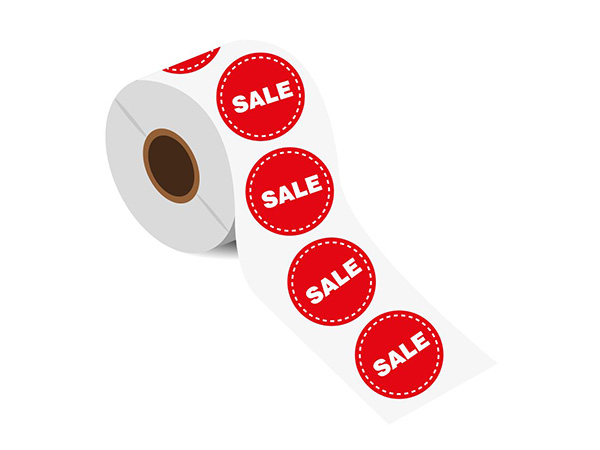
Pressure Sensitive Label Manufacturer | TLF Graphics
Key Takeaways
– TLF Graphics has manufactured pressure sensitive labels for 45 years from Rochester, NY, with ISO 9001:2015 certification and UL listings PGAA.LP1575, PGDQ2.MH15497, and PGJI2.MH19710.
– Pressure sensitive labels apply by pressing onto a surface — no heat, no solvent — making them compatible with food, beverage, industrial, health, and beauty packaging.
– Substrate options include BOPP films, polyester, polypropylene, foils, paper, and specialty materials — each suited to specific environments and regulatory requirements.
– Adhesive type is as critical as the face material: permanent, removable, repositionable, freezer-grade, and high-tack options each serve different surfaces and conditions.
– Clients including Xylem, Iron Smoke Distillery, Farmer Johns Popcorn, and Zotos Products source pressure sensitive labels from TLF’s Rochester facility.
Walk through any grocery aisle and look at the labels on bottles, jars, cans, and pouches. Almost every one of them is a pressure sensitive label. The format is that common. It shows up in food production, craft beverage, industrial manufacturing, health and beauty — virtually every category that puts a product on a shelf or ships it to a customer.
And yet brands consistently underestimate the spec decision. The adhesive that works in a climate-controlled warehouse fails in a walk-in freezer. The paper face stock that photographs beautifully absorbs moisture and lifts. The film that recycles cleanly through one stream contaminates another. Getting it right requires more than picking a label printer. It requires a manufacturer who understands how the label will actually perform. For a broader overview, see TLF’s guide to custom label printing in Rochester NY.
What Is a Pressure Sensitive Label and How Does It Work?
A pressure sensitive label is a label with a pressure-activated adhesive backing. It bonds to a surface when pressed — no heat, no water, no solvent required. According to the Flexographic Technical Association, pressure sensitive construction is now the dominant label format globally, used across nearly every consumer and industrial packaging category.
The construction is a three-layer system: a face stock (paper, film, or foil), an adhesive layer, and a silicone-coated release liner. The liner protects the adhesive during handling and releases cleanly at the point of application, whether that’s a hand-applied craft label or an automated bottling line running thousands of units per hour.
That simplicity is exactly what makes the format so flexible. The variables are in the material choices, not the application method.
Citation Capsule: Pressure sensitive labels are a three-layer laminate — face stock, adhesive, and release liner — applied without heat or solvent by pressing onto the target surface. The Flexographic Technical Association identifies pressure sensitive construction as the globally dominant label format across consumer and industrial packaging.
For a full look at the production methods behind these labels, see TLF’s print technologies overview.
What Substrates Are Available for Pressure Sensitive Labels?
The face stock determines almost everything downstream: print quality, durability, recyclability, and cost. TLF Graphics prints on films, foils, paper, plastics, and specialty pressure sensitive materials — covering the full range of substrates a product application might require.
Paper Face Stocks
Paper is the traditional choice for dry-environment applications: food cans, wine bottles, kraft pouches, and promotional labels. It accepts ink well, feels natural, and costs less than film alternatives. FSC-certified sustainable paper options are available through TLF’s supply chain, with more than 1,500 certified media options to choose from.
The limitation is moisture. Paper absorbs water, which causes lifting, wrinkling, and print degradation. For any application involving refrigeration, high humidity, or wet surfaces, a film substrate is typically the better call.
BOPP and Polyester Films
Biaxially oriented polypropylene (BOPP) is the workhorse of the pressure sensitive label industry. It’s waterproof, dimensionally stable, and takes printing cleanly across digital, flexographic, and screen processes. Polyester (PET) film adds even greater chemical and temperature resistance for industrial and automotive applications.
In TLF’s production environment, BOPP is the default film choice for food and beverage clients who need moisture resistance without moving to a specialty material. It handles high-speed application equipment reliably and doesn’t stretch or distort under tension.
Critically for brands with sustainability commitments: TLF offers BOPP films certified for HDPE stream recycling through the Association of Plastic Recyclers protocol. That’s a real recyclability claim, not a marketing position.
Foil and Specialty Substrates
Metallic foils print with high visual impact for premium beverage, spirits, and health and beauty applications. Iron Smoke Distillery and Southern Tier Beer both use label formats with metallic elements produced at TLF’s Rochester facility.
Specialty substrates include compostable and biodegradable film options for brands with formal sustainability certifications. Rough or curved surfaces — squeezable containers, tapered bottles — may require conformable films engineered to flex without lifting at edges or seams.
Citation Capsule: TLF Graphics produces pressure sensitive labels on BOPP films certified for HDPE recycling under the Association of Plastic Recyclers protocol, as well as FSC-certified paper stocks (1,500+ options) and compostable film substrates — covering the full sustainability tier from conventional to certified end-of-life.
What Adhesive Should You Use for Your Application?
The adhesive layer is the most underspecified component of a pressure sensitive label. Brands focus on design and face stock; adhesive selection often gets deferred to the printer. That’s a mistake, because adhesive failure is typically irreversible once the label is in market.
Permanent Adhesives
Permanent adhesives bond aggressively and are not designed for removal. They’re the right choice for any application where the label is meant to stay on the package for its full useful life: food cans, industrial equipment, compliance labels, and product identification on durable goods. Most standard packaging runs default to permanent formulations.
Removable and Repositionable Adhesives
Removable adhesives bond securely in normal conditions but release cleanly without leaving residue. Promotional stickers, price labels, and any application where the end user might need to peel the label fall into this category. Repositionable formulations allow even lower-tack removal and reapplication — useful in retail environments where label placement is adjusted during merchandising.
Freezer-Grade Adhesives
Standard adhesives lose tack at low temperatures and often fail when applied to cold or frozen surfaces. Freezer-grade formulations maintain bond strength at sub-zero temperatures and apply reliably to pre-chilled containers. Fresh food, frozen meal, and pharmaceutical cold-chain applications all require freezer-grade specifications.
High-Tack Adhesives for Rough Surfaces
Textured or porous surfaces — corrugated cardboard, rough-cut wood, powder-coated metal, HDPE containers — don’t provide a smooth bond plane for standard adhesives. High-tack formulations have greater flow characteristics that allow the adhesive to conform to surface irregularities and establish a reliable bond. Industrial clients at TLF, including Xylem and Volvo, regularly specify high-tack adhesives for component and equipment labeling on non-smooth substrates. See TLF’s full industrial labeling capabilities for application-specific specifications.
What Finishing Options Elevate a Pressure Sensitive Label?
Printing is only part of what determines how a label performs at shelf. Finishing — the post-print processing applied before the label ships — governs durability, tactile experience, and visual differentiation. TLF Graphics runs embellishment capabilities through its JetFX digital finishing platform, adding effects that were previously only available through offset or specialty print processes.
Varnishes and Laminates
Spot varnishing allows selective gloss or matte application to specific label zones — a matte background with a gloss product image, for example. Full-coverage laminates add scuff resistance and chemical protection across the entire face stock. Both options extend the functional life of a label in demanding environments.
Digital Foiling
Digital foiling applies metallic or holographic effects without a physical foil die. The JetFX platform produces digital foiling in register with printed content, enabling short-run premium labels that were previously cost-prohibitive at quantities under 10,000 units. Craft beverage and spirits brands use this capability routinely. Beverage label printing at TLF includes foiling as a standard finishing option.
Raised Tactile Screening and Holograms
Raised tactile printing creates a physical texture on specific label elements — a logo, a brand name, a decorative border. It’s produced digitally, which means no screen fees and no minimum volume requirement. Holographic effects fall into the same platform: applied digitally, fully customizable per SKU.
Overprint Varnish for Compliance Labels
UL-listed compliance labels have specific requirements for legibility and durability under UL’s certification programs. TLF holds three UL listings — PGAA.LP1575, PGDQ2.MH15497, and PGJI2.MH19710 — covering pressure sensitive label constructions tested and certified for compliance marking applications. Overprint varnishes on these labels protect critical safety text from abrasion and chemical exposure.
For the full range of print and embellishment options, see TLF’s product label printing and decoration capabilities.
Citation Capsule: TLF Graphics holds three UL listings (PGAA.LP1575, PGDQ2.MH15497, PGJI2.MH19710) for pressure sensitive label constructions, verified through UL’s label certification programs. ISO 9001:2015 certification is maintained through regular audits by the largest manufacturers in the US and worldwide.
How to Evaluate a Pressure Sensitive Label Manufacturer
After 45 years of production at TLF Graphics, the most common reason a new client switches manufacturers isn’t price — it’s a previous supplier’s inability to handle substrate and adhesive complexity as the client’s product line grew. Starting with the right manufacturer avoids that transition cost entirely.
Choosing a pressure sensitive label manufacturer is a long-term operational decision. Getting it wrong means production delays, label failures in market, and reformulation costs. Here’s what to verify before committing.
Quality Certifications
ISO 9001:2015 certification is the baseline quality management standard for a label manufacturer worth considering for a serious production program. It’s not a marketing credential — it requires documented process control, regular external audits, and corrective action systems. TLF Graphics maintains ISO 9001:2015 certification, with its QMS audited by some of the largest manufacturers in the US and worldwide.
For industrial, electrical, and compliance applications, UL listing is non-negotiable. A label without the correct UL listing on a certified product is a compliance violation.
Substrate and Technology Range
A manufacturer with a single print technology is constrained by that technology. Digital-only shops can’t run large-volume flexographic jobs economically. Flexographic-only shops can’t handle short-run variable data without tooling cost. TLF Graphics operates digital, flexographic, screen, embellishment, and direct-to-object production — 75+ devices from a single facility in Rochester.
The economic leverage point for most brands is a manufacturer who can run both digital and flexographic in-house. As a product line scales from pilot to full production, the label spec and run quantity change. Switching technologies mid-growth within the same supplier relationship costs nothing. Switching suppliers costs time, money, and reformulation risk.
Lean Manufacturing and On-Time Performance
Lean manufacturing isn’t a buzzword — it’s a production discipline that reduces waste, shortens lead times, and makes delivery windows more reliable. TLF Graphics implemented Lean Manufacturing in 2007. That’s nearly 20 years of systematic process refinement. It shows up as shorter turnarounds and fewer surprises.
Industry-Specific Experience
A manufacturer who prints labels for your product category already knows the regulatory requirements, substrate preferences, and common failure modes. TLF prints for food and grocery (food and grocery labels), craft beverage, industrial, and health and beauty — all from the same Rochester facility, all under the same quality system.
Frequently Asked Questions
What makes a label “pressure sensitive”?
A pressure sensitive label uses an adhesive that activates under pressure rather than heat or liquid. The label bonds to a surface when pressed, no activation step required. The construction is a three-layer laminate: face stock, pressure-activated adhesive, and a release liner that protects the adhesive until application. This makes pressure sensitive labels compatible with both hand application and high-speed automated equipment.
What’s the difference between permanent and removable pressure sensitive adhesive?
Permanent adhesives are formulated to bond aggressively and resist removal. They’re the right choice for labels meant to stay on a product through its full life cycle. Removable adhesives bond securely under normal conditions but release cleanly without residue when peeled. The Global Adhesives & Sealants Market Report (Allied Market Research, 2023) estimates pressure sensitive adhesives account for the largest single segment of the global adhesives market by volume.
Can pressure sensitive labels be recycled?
It depends on the construction. Standard paper labels with acrylic adhesive typically contaminate paper recycling streams because the adhesive doesn’t separate cleanly in pulping. TLF Graphics offers two certified alternatives: BOPP film labels certified for HDPE recycling under the Association of Plastic Recyclers protocol, and CleanFlake adhesive constructions that pass APR’s highest-level testing for PET bottle-to-bottle recycling. If recyclability is a product requirement, specify it at the start of the label development process. For category-specific sustainability guidance, see TLF’s health and beauty label capabilities.
What substrates work for freezer or refrigerated applications?
Cold-environment applications require two things: a face stock that doesn’t absorb condensation moisture (film over paper, in most cases) and a freezer-grade adhesive formulated to maintain tack at low temperatures. Paper labels applied to pre-chilled containers often fail at the adhesive layer before the label is ever opened. Film face stocks combined with freezer-grade adhesive are the standard specification for any product stored at refrigerated or frozen temperatures.
Does TLF Graphics handle short runs?
Yes. Digital printing at TLF uses no plates and no dies, which eliminates the setup cost that makes short runs expensive on conventional equipment. Variable data capability allows unlimited label versions within a single press run — different SKU names, batch codes, or fresh-date printing within one job. There’s no minimum quantity requirement tied to tooling amortization on digital jobs. Learn more about TLF’s food and grocery on-demand label printing capabilities.
What is a UL-listed label and when do I need one?
A UL-listed label has been tested and certified by UL (Underwriters Laboratories) for use in specific compliance applications — electrical equipment, industrial safety markings, and other regulated product categories. UL listing confirms that the label construction (face stock, adhesive, ink system) meets the durability and legibility standards required for that application. TLF Graphics holds three UL listings: PGAA.LP1575, PGDQ2.MH15497, and PGJI2.MH19710. If a product requires a UL-certified label, sourcing from an unlisted manufacturer creates a compliance gap.
Get a Quote from TLF Graphics
TLF Graphics has manufactured pressure sensitive labels for 45 years from Rochester, NY. Digital, flexographic, and screen printing under one roof. ISO 9001:2015 certified. UL-listed. Lean Manufacturing since 2007. 75+ production devices. A client roster spanning food, beverage, industrial, and health and beauty categories — including Xylem, Iron Smoke Distillery, Farmer Johns Popcorn, Lean Nation, Southern Tier Beer, Karma Sauce, Shop-Vac, Volvo, and Zotos Products.
If you’re sourcing pressure sensitive labels and need a manufacturer who can handle substrate complexity, adhesive specification, and compliance requirements, contact TLF Graphics to start the conversation.
TLF Graphics Inc.
235 Metro Park, Rochester, NY 14623
(800) 356-2701 | (585) 272-5500
sales@tlfgraphics.com
www.tlfgraphicsusa.com
Sources
- Flexographic Technical Association. Industry overview and pressure sensitive label format data. https://www.flexography.org/
- UL. Label certification programs — PGAA, PGDQ2, PGJI2 listings. https://www.ul.com/
- Association of Plastic Recyclers. APR Design Guide for Plastics Recyclability. Referenced in TLF Graphics sustainability documentation for BOPP HDPE and CleanFlake PET certification.
- Allied Market Research. Global Adhesives and Sealants Market Report, 2023. Pressure sensitive adhesive segment volume data.
- TLF Graphics Inc. About page, print technologies, food-grocery, health-beauty, and industrial labeling pages. https://www.tlfgraphicsusa.com